
Heavy Lift Forklifts
Australia's heavy lifting specialists deserved a website built to work just as hard.
Heavy Lift Forklifts had already built a strong reputation supplying forklifts, container handlers and heavy-duty lifting solutions across Australia.
The challenge wasn't the business. It was the website.
With an outdated structure and limited lead-generation capabilities, the site wasn't supporting growth the way it should.
Who is Heavy Lift Forklifts?
Heavy Lift Forklifts is a specialist supplier of forklifts, container handlers and heavy material handling solutions serving businesses across Australia. The company supports industries that rely on reliable lifting equipment for logistics, warehousing, transport and industrial operations.
With an extensive product range, strong industry knowledge and a commitment to customer service, Heavy Lift Forklifts has built a reputation as a trusted equipment partner.
As the business continued to grow, it needed a website that reflected its expertise, showcased its full offering and made it easier for customers to find the right solutions and make enquiries.
01
The Problem
A comprehensive forklift business with a website that couldn't keep up
Heavy Lift Forklifts offered a wide range of products, services and industry expertise. The problem was that none of it was being communicated effectively online. Important information was difficult to find, navigation required too many clicks, and enquiry forms weren't helping qualify leads.
The existing website didn't reflect the scale of the business or make it easy for potential customers to find the equipment and services they needed.

Outdated UI -- Not Matching the Product Quality
The website looked dated and lacked the professionalism expected from a business supplying specialised heavy lifting equipment and solutions.

Poor Navigation -- Brands & Services Buried
Key product categories, brands and services were difficult to locate, creating unnecessary friction for users trying to find information.

Weak Form Infrastructure -- Generic, Unqualified Enquiries
The existing enquiry process provided little context, making it difficult for the team to prioritise and qualify incoming leads.

No Location Section or Industry Vertical Pages
There were no dedicated pages targeting locations or industries, limiting search visibility and reducing relevance for specific customer segments.
02
Goals
Rebuild everything that was holding the enquiry pipeline back.
This project wasn't about making small improvements. It was about rebuilding the website from the ground up. The objective was to create a modern platform that improved user experience, strengthened lead quality and gave Heavy Lift Forklifts a website capable of supporting future growth across products, services, locations and industries.
Rebuild in WordPress -- Client Control from Day One
Create a flexible WordPress website that allowed the client to easily manage and update content without developer dependency.
Redesign UI/UX -- Match the Website to the Business
Build a user experience that reflected the professionalism, scale and expertise behind the Heavy Lift Forklifts brand.
Build Smart Forms with Offer Type Selection
Implement enquiry forms that captured better information and helped qualify leads before sales conversations began.
Add a New Location Section — Own Local Search
Create dedicated location pages designed to improve visibility for local forklift-related searches and enquiries.
Launch Industry Verticals — Speak to Each Sector
Develop industry-specific content that addressed the unique needs of different sectors and customer groups.
Add New Products — Close the Catalogue Gap
Expand product coverage across the website to better reflect the full range of solutions available.
Deliver a Mobile-First, Fully Responsive Build
Ensure the website delivered a seamless experience across desktop, tablet and mobile devices.
03
Research & Discovery
Understanding how Melbourne B2B buyers find and choose a forklift supplier.
Before design and development began, we analysed how businesses research forklift suppliers online. We evaluated competitor websites, buyer journeys, industry trends and search behaviour to understand what decision-makers needed at every stage of the enquiry process. The goal was to create a website that matched those expectations while improving visibility and lead quality. Location & Vertical Gap: The existing website missed valuable opportunities to target location-based searches and industry-specific customer needs through dedicated landing pages and content. No Offer Type -- No Intent Signal: Without structured enquiry options, the business had limited insight into what prospects actually wanted before first contact.
What the old site was failing to do for Melbourne B2B forklift buyers
The previous website made it difficult for buyers to quickly find relevant information. Product categories lacked clarity, services were not properly organised, and enquiry pathways were too generic. For decision-makers researching equipment suppliers, the experience felt fragmented. Buyers often had to navigate multiple pages to find what they needed, increasing the likelihood of drop-offs. There was also limited guidance for users who were comparing solutions or exploring options for specific industries. Instead of supporting decision-making, the website created unnecessary barriers between visitors and enquiries.
How competing Melbourne forklift suppliers were building their web presence
Competitors were investing heavily in structured websites that clearly separated products, services, industries and locations. Many sites were designed around customer intent, helping users find information with minimal effort. Industry landing pages, location-specific content and simplified enquiry pathways were becoming increasingly common. Businesses that organised information effectively were creating stronger user experiences and generating more qualified enquiries. These trends highlighted the importance of structure, usability and segmentation for improving both visibility and conversion performance.

Ecompapi's Strategic Insight
The issue wasn't a lack of products. The issue was discoverability. Heavy Lift Forklifts already offered the solutions customers needed. What was missing was a website structure that made those solutions easy to find, easy to understand and easy to enquire about. Fixing the user journey would improve everything else.
04
Our Strategy
Structure first. Then design. Then smarter forms.
Before visual design, we focused on information architecture. Once navigation, page structures and customer journeys were clearly defined, we built a modern interface around them. Every design and development decision was made to improve usability, lead quality and long-term scalability.

Information Architecture Before Visual Design
We mapped user journeys, organised products and services logically and created a website structure built around customer intent.

UI Design - Professional, Industrial, Trustworthy
The visual direction balanced professionalism and functionality while reflecting the scale and expertise of the business.

Offer Type Selector - Self-Qualifying Forms from the First Click
Smart form options allowed visitors to specify enquiry types and provide more relevant information upfront.

New Location Section - Suburb-Level Search Visibility
Dedicated location pages improved relevance for local searches and expanded the website's organic visibility.

Industry Verticals - A New Section for Sector-Specific Buyers
Industry-focused pages helped Heavy Lift Forklifts communicate more effectively with specialised customer segments.

New Products Added - Close the Catalogue Gap
Additional product pages ensured the website better represented the company's complete equipment range.

WordPress + Elementor for Client Independence
The website was built for flexibility, allowing the client to manage updates and future growth internally.
05
Execution
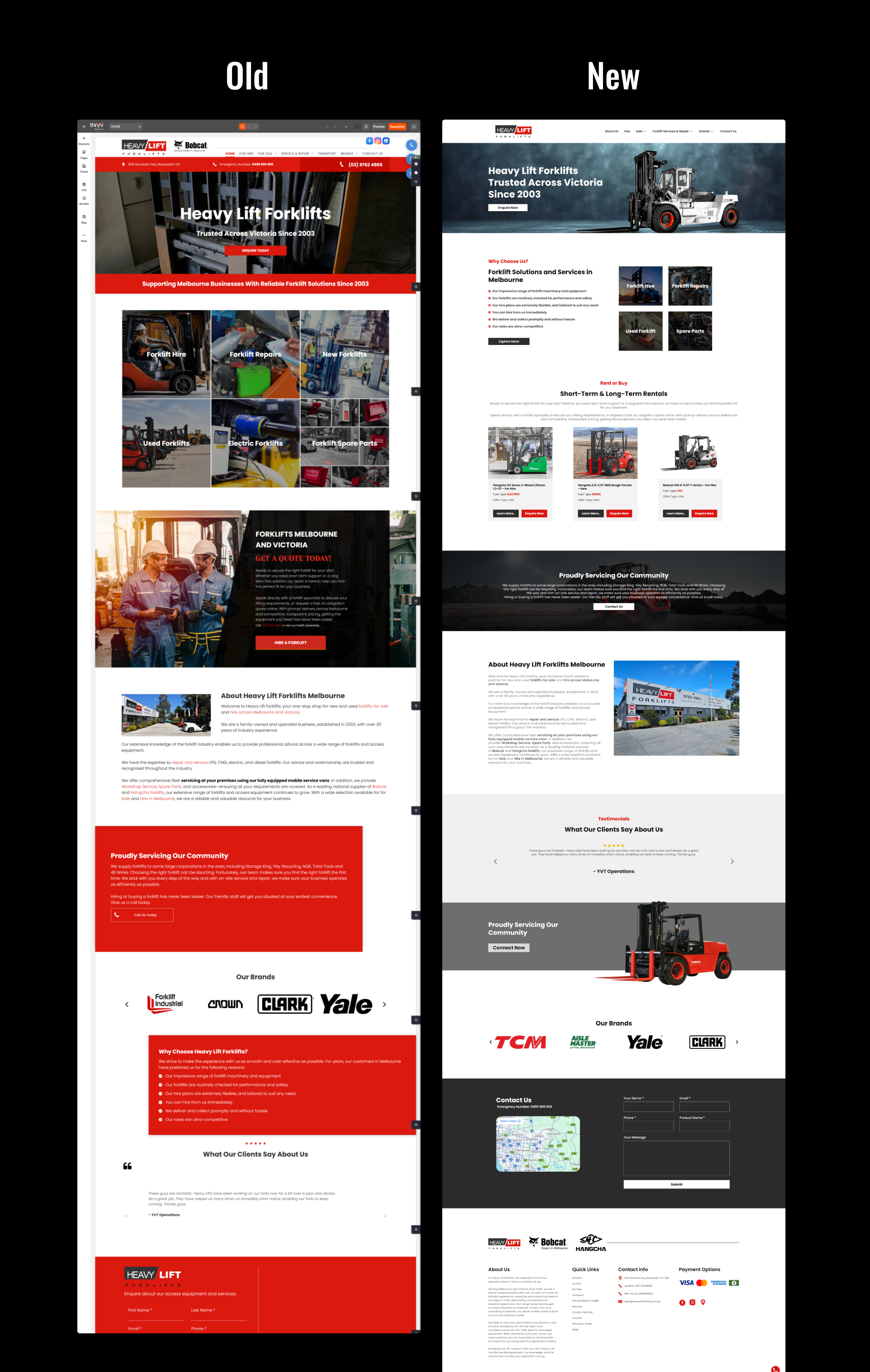
Old site to new site. Four weeks. Nothing left behind.
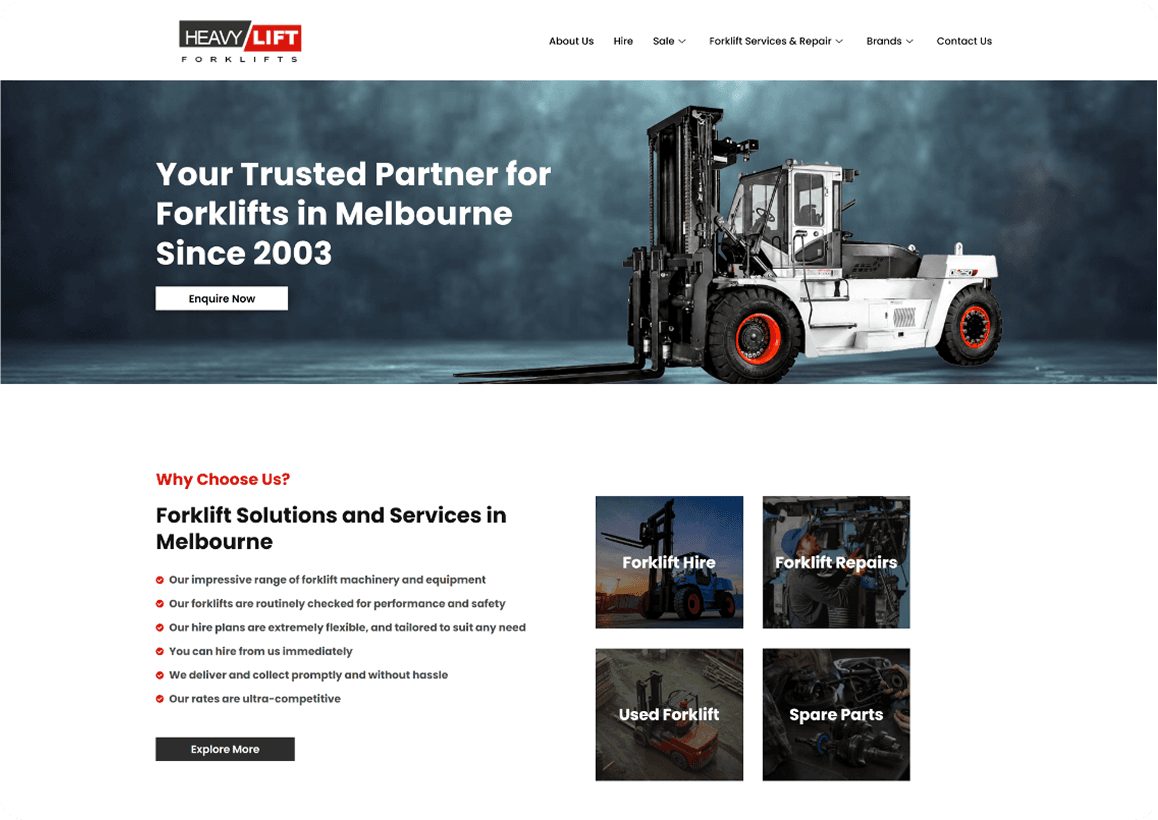
Once strategy and design direction were approved, development moved quickly. The entire website was rebuilt in WordPress, including new navigation, content structures, product pages, location pages, industry verticals and smart enquiry forms. Every element was designed to improve both user experience and lead generation.

Audit, Architecture & Design Direction
We reviewed the existing website, identified weaknesses and developed a clear plan for the rebuild.
UI Design & Component Build
Custom design components were created to ensure consistency, usability and scalability across every page.

Development Build -- All Pages, Forms, Verticals & Products
The complete website was developed with new content structures, enquiry systems and expanded product coverage.

QA, Redirect Mapping & Launch
Extensive testing, URL mapping and pre-launch reviews ensured a smooth transition to the new website.
06
Results
One month. A website that finally matched the business.
The new website transformed how Heavy Lift Forklifts presents its products, services and expertise online while creating a stronger platform for future growth.

A modern, professional design that better reflects the scale, credibility and capability of the Heavy Lift Forklifts business.
New enquiry forms capture better lead information and help qualify prospects before sales conversations begin.
A flexible platform that allows the team to manage content, products and updates with ease.
Improved navigation and page structures make it easier for visitors to find information and enquire.

What this proves
A business can have exceptional products, strong expertise and decades of industry experience, but if the website creates friction, opportunities will be lost. Heavy Lift Forklifts already had the foundations of a successful business. What it needed was a digital platform capable of supporting that success. By improving structure, navigation, content organisation and lead qualification, we created a website that works as a business tool rather than just an online brochure. This project shows that effective website design is about more than aesthetics. When user experience, information architecture and conversion strategy work together, a website becomes a powerful asset for visibility, lead generation and long-term growth.
What our clients have to say
The best way to understand how we work is through the people we've worked with. Hear their stories, experiences and the impact we've created together.
Other Case Studies
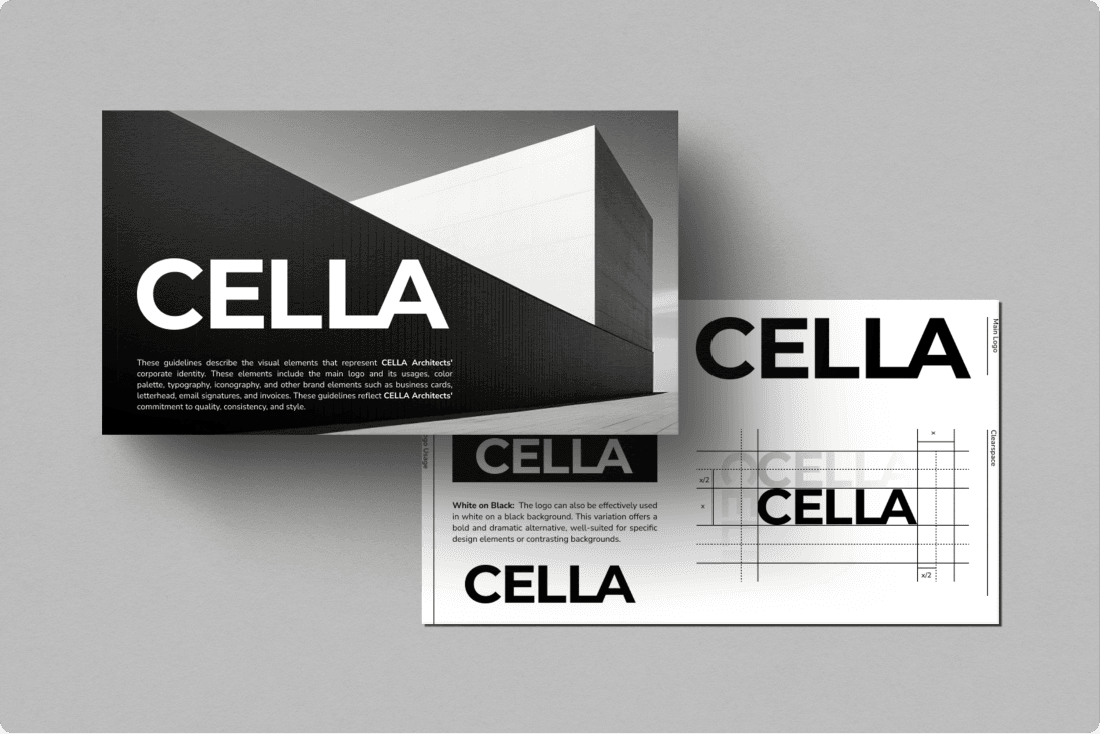

Cella Architects
Ecompapi collaborated with Cella Architects to enhance its digital presence and engage its audience through thoughtful design and content. Our UI/UX professionals created interfaces that ensured ...


Sabco Electricals
Lorem ipsum dolor sit amet, consectetur adipiscing elit. Sed do eiusmod tempor incididunt ut labore et dolore magna aliqua. Lorem ipsum dolor sit amet, consectetur adipiscing elit